Call us now :07313726136
 Send Inquiry
1000lph Ro plant
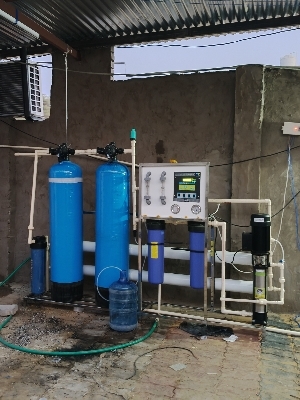

1000lph Ro plant Specification
- Ph Level
- 6.5-8
- Noise Level
- Low
- Power Consumption
- 2.0-2.5 kW
- Efficiency (%)
- 90-95%
- Feature
- High TDS Removal, Low Maintenance, Easy Operation
- Frequency
- 50-60 Hz
- Flow Rate
- 1000 L/hour
- Recycle Rate
- 50-70%
- Technology
- Reverse Osmosis (RO)
- Usage & Applications
- Drinking Water, Commercial Use, Industrial Use
- Water Out Conductivity
- < 20 S/cm
- Pump Type
- High Pressure Pump
- Water Source
- Borewell Water, Municipal Supply
- Voltage
- 220-240V
- Purity Level
- 99.9%
- Volume
- 1000 LPH (Liters Per Hour)
- Product Type
- Reverse Osmosis Water Purification Plant
- Automatic Grade
- Automatic
- Drive Type
- Electric Motor Drive
- Power Source
- Electric
- Material
- SS304/FRP/Plastic
- Filter Type
- Multi-Stage with Pre, Carbon, & Micron Filters
- Capacity
- 1000 LPH
- Installation Type
- Skid Mounted
- Operating Temperature
- 5°C - 45°C
- No. of Membranes
- 4
- Chlorine Tolerance
- <0.1 ppm
- Inlet Pressure
- >1.5 kg/cm2
- Dimensions (LxWxH)
- Approx. 1500 x 700 x 1600 mm
- Water in conductivity
- < 2000 µS/cm
- Pre-filtration
- Sand Filter, Carbon Filter
- RO Skid Material
- Powder Coated MS/SS
- Membrane Type
- TFC (Thin Film Composite)
- Feed Flow Rate
- 1500-2000 LPH
- Permeate Recovery
- 55%
- Weight
- Approx. 180 kg
- Mounting
- Floor Mounted/Skid Mounted
- Service Required
- Regular Replace of Filters & Membranes
- Control Panel
- Digital Automatic
- Reject Water Output
- 300-500 LPH
1000lph Ro plant Trade Information
- Minimum Order Quantity
- 1 Piece
- FOB Port
- 1
- Sample Available
- Yes
- Sample Policy
- Sample costs shipping and taxes has to be paid by the buyer
About 1000lph Ro plant
Revers Osmosis Water Purification PlantPlant is Skid Mounted System and can be Installed at anywhere with water Inlet. This system consists of Raw water Pump Is Take Water From Water Tank And Give to Sand Filter And Carbon Filter, Pressure Sand Filter Is Removes Turbidity, Activated Carbon Filter Removes Smell & Color, Antiscalant Dosing Worked For The Reverse Osmosis System So With The Help Of That Membranes Not Chock Up., Micron Cartage Filter Is Used For The Remove Heavy Particles Which Comes From The Filters., HP pump Is Provide Pressure To Membranes and R . O . Membranes Is Remove Heavy TDS. Hardness, Alkalinity, Iron, Etc. with Pressure Vessels and sophisticated Instruments with Programmed Control Logic for its full proof Operation. System Include the Electrical and Instrument Control panel PLC Base on Skid.Intelligent Control With Digital Automation
Equipped with a digital automatic control panel, this RO plant simplifies operation and system monitoring. Its advanced controls ensure precise management of all purification stages, enabling hassle-free, efficient operation with minimal oversight.
High-Efficiency Water Purification
The system offers a remarkable 55% permeate recovery and up to 99.9% purity, thanks to its multi-stage filtration process involving sand, carbon, and TFC membrane stages. It efficiently removes high levels of TDS, catering to both municipal and borewell water sources.
Robust Design and Versatile Installation
Fabricated from premium SS304/FRP with powder coating, the plant is built for durability and can be mounted on the floor or skid. Its compact size and mobility allow for easy placement in various industrial, commercial, and drinking water applications.
FAQ's of 1000lph Ro plant:
Q: How does the 1000 LPH RO plant ensure superior water purity?
A: The plant uses a multi-stage purification process-sand filter, carbon filter, and TFC membranes-achieving up to 99.9% removal of TDS and delivering water with conductivity below 20 S/cm, making it suitable for a wide range of clean water needs.Q: What maintenance is required for the plant and how often should it be performed?
A: Regular replacement of filters and membranes is necessary to sustain optimal performance. Maintenance schedules depend on feed water quality and usage but generally involve filter changes every 6-12 months and membrane replacement every 2-3 years.Q: When should this RO plant be considered for installation?
A: Consider this system if you require consistent, high-quality purified water at a 1000 LPH rate for industrial, commercial, or drinking purposes, or when you need to handle water sources with TDS levels below 2000 S/cm.Q: Where can the 1000 LPH RO plant be installed?
A: Designed for flexible mounting, the plant can be installed on the floor or on a skid. Its robust design allows placement in various environments, including factories, offices, hospitality facilities, and institutions requiring large-scale water purification.Q: What is the process flow through the RO plant?
A: Feed water first passes through sand and carbon pre-filters before entering the TFC membrane stage. High-pressure pumps drive water through these stages, separating impurities and yielding permeate water, with a recovery rate of about 55% and a reject output of 300-500 LPH.Q: How does this RO system benefit users in the long term?
A: Users benefit from consistently high-quality water, low noise operation, and reduced maintenance needs. Its efficient TDS removal and automated controls also result in reliable, cost-effective water treatment suitable for a range of applications.Q: What types of water sources are compatible with this RO plant?
A: The system can handle both borewell and municipal water sources, as long as the inlet pressure is above 1.5 kg/cm2 and input conductivity does not exceed 2000 S/cm.Tell us about your requirement

Price:
Quantity
Select Unit
- 50
- 100
- 200
- 250
- 500
- 1000+
Additional detail
Mobile number
Email

More Products in Mineral Water Plants Category
50 BPM Mineral Water Plant
Price 125000 INR / Unit
Minimum Order Quantity : 1 Unit
Material : Stainless Steel
Warranty : 1 Year
Automatic Grade : Semi Automatic
Capacity : 50 Pcs/min

 Send Inquiry
Our Products
- Reverse Osmosis Plant
- Pressure Pumps
- Dosing Pump
- Demineralization Plant
- Water Softening System
- FRP Vessels
- Multiport Valves
- Water Chiller
- Pool Construction Services
- Ro Membrane
- Mineral Water Plants
- Water Softening Plant
- Membrane Cleaning
- Self Priming Pump
- Reverse Osmosis Plant Controller
- Ro Antiscalant Dosing Chemical
- Acrylic Tube Rotameter
- Swimming Pool Filtration Plant
- Water Filter Housing
- UPI Water ATM Machine
- Textile Effluent Treatment Plant
- Ro Filter Cartridge
- Chemical Dosing Tank
- Membrane Housing
- Water Distribution System

Plot No A-5, Bahubali Nagar, Vt Road, Radha Swami Nursery Ke Pas, Galiyas Village,Jaipur - 302020, Rajasthan, India

Mr Rakesh
(Manager)
Mobile :07313726136
 Send Inquiry
 Send SMS
Developed and Managed by Infocom Network Private Limited.
